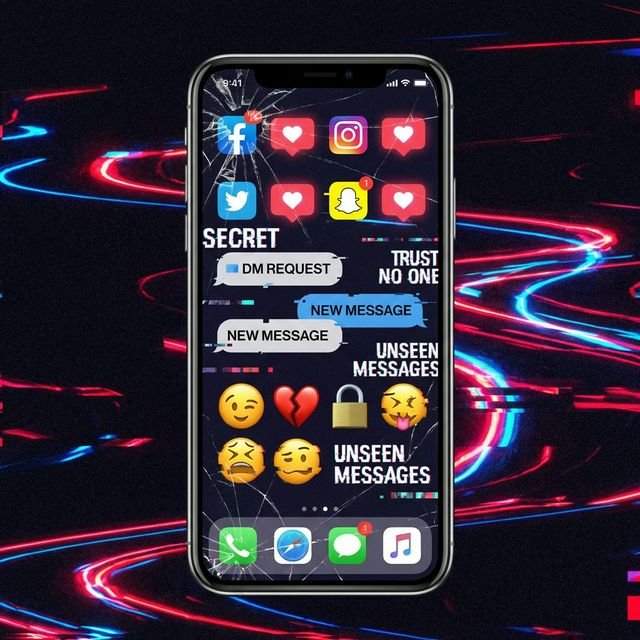
Micro cheating is a pattern of seemingly small, secretive behaviors that blur the line between friendship and infidelity. While no physical boundary is crossed, these actions involve emotional intimacy, secrecy, and deception that violate the trust in a committed relationship.
The term has gained traction in recent years as digital communication makes it easier than ever to maintain hidden emotional connections. A 2024 study by the American Association for Marriage and Family Therapy found that 45% of men and 35% of women admitted to engaging in at least one micro cheating behavior in their current relationship.
As private investigators, we see micro cheating all the time and more importantly, we see where it leads. In our experience, over 60% of full affairs started with behaviors that would qualify as micro cheating.
Important Distinction
Micro cheating is not the same as having friends of the opposite sex, being friendly with coworkers, or maintaining healthy social relationships. The key difference is secrecy. If your partner would be uncomfortable seeing the interaction, and you know it—that's micro cheating.
1. Secret Messaging with a Specific Person
The most common micro cheating behavior we encounter is secret, ongoing messaging with a specific individual. This goes beyond casual texting:
Red Flags
- Deleting message threads: Regularly clearing conversations with one particular person
- Using disappearing messages: Switching to Signal, Telegram's secret chats, or Snapchat specifically for one contact
- Late-night texting: Consistent messaging after you've gone to bed or in early morning hours
- Notification hiding: Turning off message previews or using "Do Not Disturb" only for certain apps
What Investigators Look For
We examine messaging patterns, not just content. A sudden switch to encrypted or vanishing messages for a single contact—when they previously used standard texting—is a significant behavioral shift.
2. Downplaying a Relationship
When your partner deliberately minimizes the closeness of a relationship with someone else, pay attention. This includes:
- "Just a friend": Dismissing someone they clearly share deep emotional connection with
- "We barely talk": Claiming infrequent contact when phone records show daily interaction
- Omitting details: Mentioning lunch with "the team" when it was actually one-on-one with a specific coworker
- Reducing someone's significance: Descriptions like "she's nobody" or "he's just in my group project" when they spend significant time together
Case Example
A client's husband described a female colleague as "just someone in accounting." Our investigation revealed they had lunch together 4–5 times per week, exchanged over 200 texts monthly, and he had saved her under a male contact name in his phone. Though no physical affair was confirmed, the deception was substantial.
3. Social Media Flirting
Social media provides a gray area that micro-cheaters exploit. Watch for:
Engagement Patterns
- Consistent likes: Liking every photo of the same person, especially selfies or suggestive posts
- Flirty comments: Leaving fire emojis (🔥), heart-eyes (😍), or suggestive replies on someone's posts
- Story reactions: Repeatedly reacting to one person's Instagram or Snapchat stories
- DM sliding: Replying to stories as a pretext to start private conversations
Account Behavior
- Following someone, unfollowing, and re-following to get their attention
- Creating secondary or "finsta" accounts to interact without your knowledge
- Viewing someone's profile obsessively (some apps now reveal this)
Digital Forensics Note
Even "deleted" social media interactions leave traces. Cached data, notification logs, and activity history often preserve evidence of micro cheating behavior long after messages are removed.
4. Emotional Confiding in Someone Else
One of the most damaging forms of micro cheating is redirecting emotional intimacy away from your relationship:
- Sharing relationship problems: Venting about you to an attractive friend instead of communicating directly
- Seeking comfort elsewhere: Turning to a specific person during stress instead of their partner
- Sharing secrets: Telling someone else things they haven't told you—dreams, fears, personal history
- Creating emotional dependency: "You're the only one who really understands me"
Why This Matters
Emotional confiding creates a bond that can be more intimate than physical contact. Therapists call this an "emotional affair" and it's the foundation upon which most physical affairs are built. If your partner is sharing their inner world with someone else while shutting you out, the relationship is already in danger.
5. Inside Jokes and Pet Names
Creating a private world with someone outside your relationship is a subtle but telling sign:
- Special nicknames: Using pet names for someone that feel inappropriately familiar
- Shared humor: Inside jokes that they reference but can't (or won't) explain to you
- Private references: "Our song," "our show," or "our place" with someone else
- Coded language: Using code words or emojis with specific hidden meanings
These micro behaviors create emotional exclusivity, a sense that they share something special with another person that you're not part of. Over time, this "private world" deepens the emotional bond outside your relationship.
6. Dressing Up for One Specific Person
Everyone wants to look presentable. But a noticeable, targeted effort signals something deeper:
- Selective grooming: Extra effort on days when they'll see a specific coworker or friend
- New purchases: Buying cologne, perfume, or new clothes seemingly tied to seeing someone
- Gym motivation: Suddenly obsessed with fitness after connecting with a new person
- Contrast with home: Looking polished for "work events" but not making the same effort for date nights with you
Pattern Recognition
We advise clients to note which days their partner makes extra effort and cross reference this with their schedule. Consistent patterns pointing to one person are significant.
7. Keeping Someone "On the Hook"
This involves maintaining a connection with someone as a romantic backup without fully committing to pursuing them:
- Occasional flirty messages: Just enough contact to keep the other person interested
- Ambiguous availability: Never fully shutting down someone's romantic interest
- Strategic likes and comments: Periodic social media engagement to stay on someone's radar
- Accepting invitations: Agreeing to one-on-one meetups framed as "catching up"
Case Example
We investigated a case where a wife's husband maintained casual texting with three ex-girlfriends. He never said anything explicitly romantic, but the pattern was clear: a "happy birthday" here, a "saw this and thought of you" there. When his marriage hit a rough patch, one of those exes became a full affair within two weeks. The groundwork had been laid for years.
8. Comparing You to Someone Else
Frequent, favorable comparisons to another person—especially presented as "helpful" observation—are a major red flag:
- "She always...": Highlighting how someone else behaves in contrast to you
- Appearance comparisons: Commenting on how another person looks, dresses, or stays fit
- Skill comparisons: "Jake cooks amazing meals" or "Sarah really understands football"
- Personality idealization: Describing someone else's traits in a way that implies you're lacking
These comparisons serve a dual purpose: they mentally elevate the other person while creating distance in the relationship. It's a way of justifying emotional investment in someone else.
9. Hiding Interactions from You
The most telling sign of micro cheating is deliberate concealment. If the interaction is truly innocent, why hide it?
Common Hiding Behaviors
- Phone angling: Tilting their screen away when you walk by
- Quick app switching: Rapidly changing what's on screen when you approach
- Browser clearing: Deleting search history or using incognito mode for communication
- Contact disguising: Saving someone under a different name (e.g., "Dave from IT" for "Diana")
Behavioral Concealment
- Stepping outside to take calls
- Leaving the room to respond to texts
- Failing to mention encounters ("I ran into her today" only comes out if asked directly)
- Getting defensive or angry when questioned about a specific person
The Secrecy Test
Ask yourself: Would your partner behave the same way if you were standing right next to them? If the answer is no—if they'd text differently, act differently, or not engage at all—then the secrecy itself is the betrayal.
10. Maintaining Dating App Profiles
Perhaps the clearest micro cheating signal: keeping an active presence on dating platforms while in a committed relationship.
What Counts
- Active profiles: Updated photos, recent login activity, or active "last seen" timestamps
- Browsing without matching: "Just looking" or "I forgot to delete it" excuses
- Redownloading apps: Repeatedly installing and uninstalling dating apps
- Profile updates: Changing bios, adding new photos, or adjusting preferences
Common Excuses
- "I just use it for the ego boost"
- "I forgot the password so I can't delete it"
- "Everyone has one, it doesn't mean anything"
- "I'm just swiping when I'm bored"
Investigation Insight
We frequently use dating app profile searches as part of infidelity investigations. Most platforms leave a digital footprint—even "deleted" accounts can be detected through linked email addresses, phone numbers, or cached profile data.
When Micro Cheating Escalates
Micro cheating rarely stays "micro." In our investigative experience, the progression typically follows this pattern:
The Escalation Timeline
- Stage 1 — Innocent contact: Friendly interaction that seems harmless
- Stage 2 — Increased frequency: Communication becomes daily, then multiple times per day
- Stage 3 — Emotional deepening: Sharing personal feelings, relationship frustrations, and vulnerabilities
- Stage 4 — Secrecy: Hiding the depth of the connection from their partner
- Stage 5 — Physical meeting: Finding excuses to meet one-on-one
- Stage 6 — Physical affair: The emotional foundation makes the physical step feel "natural"
Key Statistic
Research published in the Journal of Sex & Marital Therapy found that 78% of men and 92% of women who had physical affairs reported engaging in emotional infidelity first. Micro cheating is the earliest stage of this pipeline.
What to Do If You Recognize These Signs
If you've identified multiple micro cheating signs in your partner's behavior, here's how to handle it:
Step 1: Document What You've Observed
Before confronting your partner, keep a calm record of specific behaviors, dates, times, and contexts. A journal or note on your phone works. Avoid jumping to conclusions based on a single incident.
Step 2: Evaluate the Pattern
One or two isolated behaviors might be innocent. But multiple signs pointing to the same person combined with secrecy is a pattern that demands attention.
Step 3: Have a Direct Conversation
Use "I" statements rather than accusations: "I've noticed you've been texting [name] a lot and it makes me uncomfortable." Their response will tell you a great deal defensiveness and deflection are red flags.
Step 4: Set Clear Boundaries
If micro cheating is confirmed, discuss what behaviors are unacceptable. Both partners need to agree on boundaries around outside relationships.
Step 5: Consider Professional Help
If the behavior continues, or if you suspect it has already escalated beyond micro cheating, it may be time to involve a professional.
Suspect It's Gone Beyond Micro cheating?
Our licensed investigators specialize in uncovering the full truth discreetly and legally. If micro cheating has escalated, we can provide the evidence you need.
Learn About Our Services